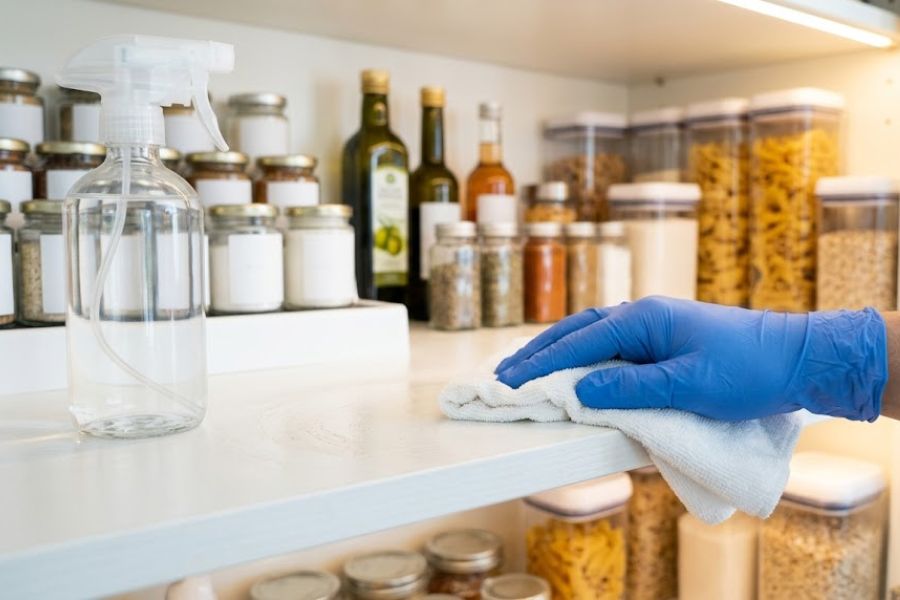
Why Rodent Droppings Need Expert Cleanup in Augusta
Rodent droppings cleanup is one of the most health-sensitive tasks tied with a rodent infestation. One of the most often handled incorrectly by owners. Dry sweeping or vacuuming rodent droppings without HEPA filtration aerosolizes particles that can carry hantavirus, Leptospira. Salmonella. Augusta's humid subtropical climate does not deactivate these pathogens as fast as cold-dry settings do. Fouled insulation and droppings in an Augusta attic can stays infectious for months.
Standard household vacuums are exactly wrong for rodent droppings. They aerosolize hantavirus particles into respirable air. Cleanup needs HEPA-filtered equipment, EPA-registered disinfectant, and PPE (N95 minimum, gloves, eye protection). Dry sweeping is also wrong for the same reason. The correct sequence: disinfectant spray, 5-minute dwell, paper-towel wipe-down, HEPA vacuum on hard surfaces only.
Augusta Rodent Control follows a strict cleanup method: wet application of enzyme-based cleaner before any physical removal, HEPA-filter vacuum or double-bagged manual collection. A second cleaner application after all matter is removed. We do not dry-sweep, we do not use standard household vacuums. We do not skip the pre-treatment step no matter of how minor the soiling appears.
Augusta humidity and pathogen persistence: Hantavirus is transmitted mainly through inhalation of aerosolized particles from fouled droppings, urine, and nesting goods. While hantavirus is rare in Georgia, the risk is not zero. Augusta's humidity slows the desiccation that reduces outdoor pathogen load in drier climates. Expert cleanup with proper PPE and method is the right response to any confirmed rodent fouling in an enclosed space.
What Rodent Droppings Cleanup Has
- Pre-treatment enzyme cleaner application
- Dwell-time compliance (most often 5-10 minutes).
- HEPA-filter vacuum or manual double-bag collection.
- Nesting stuff removal and bagging
- Second cleaner application post-removal
- Tainted insulation flagging (separate scope)
- Ventilation review for enclosed spaces
- Photo records before and after
Where We Clean. Augusta Places
The three most common cleanup sites in Richmond County places are attics (roof rat droppings concentrated near nesting sites and along rafters), crawl spaces (Norway rat fouling of vapor barriers and subfloor areas). Inner spaces like kitchen cabinets, pantry bases. Basement areas. Each spot needs varied reach tools and cleanup approach, attic work needs proper PPE and HEPA tools suited to above spaces. Crawl-space work needs below-grade access and more damp precautions in Augusta's humid setting.
Health Risks of Rodent Droppings in Augusta Buildings
Rodent droppings carry pathogens that survive in dried form for weeks, which is why cleanup approach matters more than most owners assume. The droppings in your attic from a rodent that vacated months ago can still aerosolize bacteria, viruses. Parasites when disturbed by routine signs, moving stored items, replacing HVAC filters, adding insulation. Cleanup isn't optional cosmetic work. It's a measurable health-risk reduction.
The exact pathogens of concern in the Augusta market cover hantavirus (deer mice in rural CSRA areas), salmonella (all rodent species), leptospirosis (Norway rats, mainly in canal-nearby and waterway buildings). Many secondary bacteria from rodent gut flora. Augusta's humid climate doesn't kill these pathogens fast the way drier markets do, droppings in an attic crawlspace can stays infectious for months longer than the CDC's general guidance shows for cooler climates.
The single most common mistake owners make is dry-sweeping or vacuuming droppings with a standard household vacuum. Both actions aerosolize dust that holds pathogen particles, distributing them through the home's airflow rather than removing them. Proper cleanup uses HEPA-filtered vacuums, wet-cleaning methods with cleaner pre-treatment, and PPE for the technicians doing the work. Standard home gear doesn't meet this threshold.
What Shapes the Quote for Rodent Droppings Cleanup in Augusta
| Cleanup Scope | Standard Use Case |
|---|---|
| Spot cleanup (single zone, light fouling) | Localized droppings in pantry, cabinet, or single attic corner. Removal, HEPA vacuum, surface disinfection. |
| Attic or crawl space cleanup (moderate fouling) | Set up action zone, HEPA vacuum, fouled stuff removal, disinfection of structural surfaces. |
| Whole-area cleanup + cleanup (heavy soiling) | Multi-month colony signs with widespread soiling. Has insulation removal if needed. |
| Cleanup + insulation new | Where insulation has been compromised by longer rodent activity. See insulation new. |
Augusta's older areas, such as Olde Town, Harrisburg, and the historic blocks of Summerville, often take more work because attic and crawl space access tends to be more restrictive and the soiling has often had longer to develop. Newer building in Martinez, Evans, and Grovetown tends to take less work because reach is easier and soiling is most often more localized.
Factors That Change Your Specific Quote
- Affected square footage and accessibility (open garage floor vs. behind shelving vs. attic deck)
- Contamination level: light scatter vs. heavy concentrated areas
- PPE and HEPA equipment requirement (always required, never household vacuum)
- EPA-registered disinfectant scope and dwell-time required
- Whether contaminated stored items (boxes, fabric, paper) need separate disposal scope
About insurance: Droppings cleanup may qualify as secondary damage under HO-3 policies when tied to a documented infestation. We document scope separately so the cleanup portion can be isolated for adjuster review.
Want a written quote? Call (844) 635-0403 for a free cleanup-scope assessment.
Droppings Cleanup FAQ
Why can't I just sweep up the droppings myself?
Dry sweeping aerosolizes particles that can carry hantavirus and other pathogens. The CDC suggests wetting droppings with cleaner before removal, using gloves and a N95 or better respirator, and double-bagging all soiled matter. For major infestations or enclosed spaces with poor ventilation, pro cleanup with HEPA tools is the right approach.
How much does rodent droppings cleanup cost in Augusta?
Cleanup of a small area like a kitchen or pantry is a smaller job than an attic or crawl space. Larger areas are quoted after inspection, based on the area affected and the degree of soiling. Insulation replacement, if needed, is a separate scope quoted on site.
Do I need cleanup before or after exclusion?
After removal and before exclusion sealing. The sequence is: active infestation removal, droppings cleanup and cleanup, then entry-point sealing. Cleanup confirms the infestation is gone and removes the pheromone trails that attract new rodents to the same spots.
Do rat droppings and mouse droppings need varied cleanup?
The method is the same, pre-treatment cleaner, HEPA collection, post-treatment cleaner. Rat droppings are larger and more concentrated in nesting areas. Mouse droppings are scattered broadly along travel paths. Rat cleanup most often involves more nesting goods removal alongside the droppings themselves.
Can you confirm the infestation is gone before cleanup?
Yes. We inspect before cleanup to confirm no active infestation stays. Cleaning before removal is whole wastes both the cleanup cost and the cleaner, and new droppings will recontaminate the space. We always treat in sequence: remove, then clean, then seal.
Can I clean up rodent droppings myself?
For small isolated cleanup (a few droppings in a cabinet), yes, with proper precautions. Wet the droppings with a 10% bleach solution before any removal, wear N95 or better mask plus gloves. Never dry-sweep or vacuum with a standard vacuum. For attic or crawl space fouling beyond a localized area, expert cleanup with HEPA-filtered tools is the safer choice.
How long are droppings dangerous after rodents leave?
Several weeks at minimum, sometimes months. Many pathogens (salmonella, leptospirosis bacteria, hantavirus) survive in dried droppings for long periods in Augusta's humid climate. Time-based "safe" thresholds shift by pathogen, there's no single waiting period that makes cleanup unnecessary. The CDC's general guidance applies: treat all rodent droppings as possibly infectious no matter of how long the rodents have been gone.
Will my owners insurance cover droppings cleanup?
Almost never. Standard owners insurance excludes rodent damage and the cleanup of rodent soiling. Reach might apply if rodent movement caused secondary damage covered by the policy (electric fire from gnawed wiring, water damage from a chewed plumbing line). The cleanup itself is rarely covered. Record the soiling and our service for any insurance claim tied to secondary damage.
Do I need cleanup if the rodents are gone?
For light isolated signs, no, basic sanitizing is most often enough. For established colony signs (seen droppings concentrated in attic, crawl space, or stored areas), yes. The pathogens don't leave when the rodents do, and home airflow continues to distribute particles from disturbed fouled areas. The choice is health-risk-based, not aesthetic.
Linked Services
Stop the Damage Before It Spreads. Get a Free Check
Safe droppings cleanup and sanitizing for Augusta homes and businesses. Call now to book, we confirm same-day gaps for Richmond County handles.
📞 Call (844) 635-0403